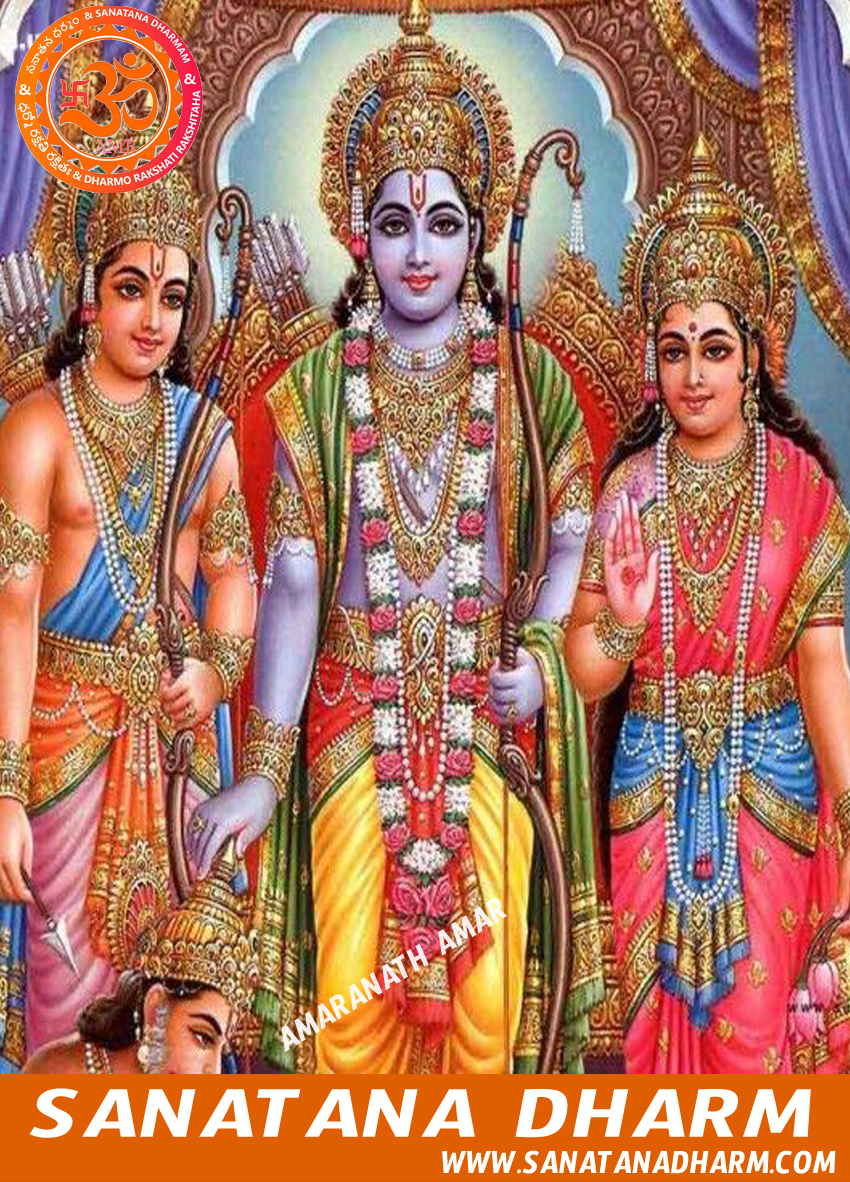
Seetha was distressed to hear these words of Rama and spoke these words slowly, with her face with tears.
यह सुनकर, दुखी सीता राम से बोलीं, जिनके मुख पर आँसू थे और जो धीरे-धीरे बोल रही थीं।
Ayodhya Kanda – Sarga 29 · v2
ये त्वया कीर्तिता दोषा वने वस्तव्यताम् प्रति |
गुणान् इति एव तान् विद्धि तव स्नेह पुरः कृतान् || २-२९-२
"know all those disadvantages you mentioned about dwelling in the forest become advantages to me, if your affection is placed before them."
जो दोष तुमने वन में रहने के लिए बताए हैं, उन्हें तुम अपने स्नेह के कारण किए गए गुण ही समझो।
Ayodhya Kanda – Sarga 29 · v3
मृगाः सिम्हा गजाश्चैव शार्दूलाः शरभास्तथा |
पक्षिणः सृमराश्चैव ये चान्ये वनचारिणः || २-२९-३
अदृष्टपूर्वरूपत्वात्सर्वे ते तव राघव |
रूपम् दृष्ट्वापसर्पेयुर्भये सर्वे हि बिभ्यति || २-२९-४
"Oh Rama! Antelopes, lions, elephants, tigers, sarabhas(legendary animal with eight legs), birds, yaks and all others which roam in the forest, run away after seeing your form, since they have never seen your figure before. When there is cause for fear, who would not have fear?"
हे राघव, वन में रहने वाले हिरण, सिंह, हाथी, बाघ, शरभ, पक्षी, मृग और अन्य सभी जीव, क्योंकि उन्होंने पहले कभी ऐसा रूप नहीं देखा है, वे भयभीत होकर भाग जाएंगे, क्योंकि सभी भय से कांपते हैं।
Ayodhya Kanda – Sarga 29 · v4
त्वया च सह गन्तव्यम् मया गुरु जन आज्ञया |
त्वद् वियोगेन मे राम त्यक्तव्यम् इह जीवितम् || २-२९-५
"Oh, Rama! As per the command of the elders, I also should go along with you. My life is to be abandoned here, if I were separated from you."
गुरुजनों की आज्ञा से मुझे तुम्हारे साथ जाना होगा। हे राम, तुम्हारे वियोग में मुझे यहीं अपना जीवन त्यागना पड़ेगा।
Ayodhya Kanda – Sarga 29 · v5
न च माम् त्वत् समीपस्थम् अपि शक्नोति राघव |
सुराणाम् ईश्वरः शक्रः प्रधर्षयितुम् ओजसा || २-२९-६
"Oh Rama! Even Devendra the Lord of celestials, by his strength, cannot over power me, who is in your vicinity."
हे राघव, तुम्हारे समीप होने पर भी, देवराज इंद्र अपनी शक्ति से मुझे पराजित नहीं कर सकते।
Ayodhya Kanda – Sarga 29 · v6
पति हीना तु या नारी न सा शक्ष्यति जीवितुम् |
कामम् एवम् विधम् राम त्वया मम विदर्शितम् || २-२९-७
"Oh Rama! Verily such a thing was taught to me by you, that a woman disunited from her husband should not be able to survive."
जो स्त्री पति से रहित है, वह जीवित नहीं रह सकती। हे राम, आपने मुझे इस प्रकार का (दुःख) दिखाया है।
Ayodhya Kanda – Sarga 29 · v7
अथ च अपि महा प्राज्ञ ब्राह्मणानाम् मया श्रुतम् |
पुरा पितृ गृहे सत्यम् वस्तव्यम् किल मे वने || २-२९-८
"Oh Rama, the very wise! Besides, formerly in my father's house it was heard by me from the month of brahmanas that I was destined to stay really in a forest."
यह श्लोक कहता है कि मैंने बहुत बुद्धिमान ब्राह्मणों से सुना है कि पहले मुझे अपने पिता के घर में रहना था, न कि वन में।
Ayodhya Kanda – Sarga 29 · v8
लक्षणिभ्यो द्विजातिभ्यः श्रुत्वा अहम् वचनम् गृहे |
वन वास कृत उत्साहा नित्यम् एव महा बल || २-२९-९
"Oh Rama the man of great strength! Ever since I heard this word from brahmanas who can interpret marks on the body, I was always eager to stay in a forest."
यह श्लोक कहता है कि लक्षणों से युक्त द्विजातियों (ब्राह्मण, क्षत्रिय, वैश्य) से सुनकर, घर में रहते हुए भी, महाबली ने वनवास के लिए सदा उत्साह दिखाया।
Ayodhya Kanda – Sarga 29 · v9
आदेशो वन वासस्य प्राप्तव्यः स मया किल |
सा त्वया सह तत्र अहम् यास्यामि प्रिय न अन्यथा || २-२९-१०
"Oh, Rama the beloved! That prediction of dwelling in the forst is to be realised by me. I must accordingly accompany you to the forest, it cannot be otherwise."
यह आदेश है कि मुझे वनवास प्राप्त करना होगा। हे प्रिय, मैं तुम्हारे साथ ही वहाँ चलूँगा, अन्यथा नहीं।
Ayodhya Kanda – Sarga 29 · v10
कृत आदेशा भविष्यामि गमिष्यामि सह त्वया |
कालः च अयम् समुत्पन्नः सत्य वाग् भवतु द्विजः || २-२९-११
"I shall be the one who has fulfilled the brahmana's word. I shall accompany you to the forest. The time has come for brahmana's words to come true."
मैं आपकी आज्ञा का पालन करूँगा और आपके साथ चलूँगा। यह समय आ गया है, हे द्विज, कि आपकी वाणी सत्य सिद्ध हो।
Ayodhya Kanda – Sarga 29 · v11
वन वासे हि जानामि दुह्खानि बहुधा किल |
प्राप्यन्ते नियतम् वीर पुरुषैः अकृत आत्मभिः || २-२९-१२
"Oh valiant prince! I know that in the forest, sufferings indeed are many and are invariably obtained by men having unformed minds."
वनवास में ही मैंने जाना कि दुखी लोग बहुत होते हैं। यह निश्चित है कि आत्म-नियंत्रण न रखने वाले वीर पुरुष भी कष्ट पाते हैं।
Ayodhya Kanda – Sarga 29 · v12
कन्यया च पितुर् गेहे वन वासः श्रुतः मया भिक्षिण्याः साधु वृत्ताया मम मातुर् इह अग्रतः || २-२९-१३
"While I was an unmarried girl, the prediction about my dwelling the forest was heard by me in my father's house from a female mendicant having good manners, in the presence of my mother."
यहाँ श्लोक का सरल हिंदी अनुवाद दिया गया है: पिता के घर में कन्या का वनवास मैंने सुना है, उसी प्रकार मेरी साधुवृत्ति वाली माँ का भी यहाँ मेरे सामने वनवास हुआ है।
Ayodhya Kanda – Sarga 29 · v13
प्रसादितः च वै पूर्वम् त्वम् वै बहु विधम् प्रभो |
गमनम् वन वासस्य कान्क्षितम् हि सह त्वया || २-२९-१४
"Oh Lord! In the past, you have been really pleased for many a time to take me along with you indeed for the tour of a forest, as longed by me."
हे प्रभु, आपने पहले ही मुझे बहुत प्रसन्न किया है। वनवास की इच्छा तो आपके साथ ही है।
Ayodhya Kanda – Sarga 29 · v14
कृत क्षणा अहम् भद्रम् ते गमनम् प्रति राघव |
वन वासस्य शूरस्य चर्या हि मम रोचते || २-२९-१५
"Oh, Rama! May all be well with you! I am waiting for a journey to the forest. A work-out of adventurist is really delightful to me."
हे राघव, तुम्हारा क्षण भर भी रुकना मेरे लिए कल्याणकारी है। मुझे शूरवीर की तरह वनवास का जीवन बहुत प्रिय है।
Ayodhya Kanda – Sarga 29 · v15
शुद्ध आत्मन् प्रेम भावाद्द् हि भविष्यामि विकल्मषा |
भर्तारम् अनुगच्चन्ती भर्ता हि मम दैवतम् || २-२९-१६
"Oh, the pure-minded! Following my husband with loving devotion, I shall become sin-less; for husband is the supreme deity to me."
हे आत्मन्, प्रेम भाव से मैं निष्पाप हो जाऊँगी। पति का अनुसरण करती हुई, मेरे पति ही मेरे देवता हैं।
Ayodhya Kanda – Sarga 29 · v16
प्रेत्य भावे अपि कल्याणः सम्गमः मे सह त्वया |
श्रुतिर् हि श्रूयते पुण्या ब्राह्मणानाम् यशस्विनाम् || २-२९-१७
इह लोके च पितृभिर् या स्त्री यस्य महा मते |
अद्भिर् दत्ता स्वधर्मेण प्रेत्य भावे अपि तस्य सा || २-२९-१८
"Even after my death, I shall stay united with you. On this subject, the meritorious words of brahmanas is being heard thus:- In this world, which woman was given away to whom by parents with water according to the moral code binding on them, that woman belongs to him alone even after death.
यहाँ श्लोक का सरल हिंदी अनुवाद दिया गया है: मृत्यु के बाद भी तुम्हारा साथ कल्याणकारी होगा, क्योंकि यशस्वी ब्राह्मणों की यह पवित्र वाणी सुनी जाती है। इस लोक में जिस स्त्री को पिता ने अपने धर्म के अनुसार किसी महाबुद्धिमान पुरुष को दिया है, वह मृत्यु के बाद भी उसी की रहती है।
Ayodhya Kanda – Sarga 29 · v17
एवम् अस्मात् स्वकाम् नारीम् सुवृत्ताम् हि पति व्रताम् |
न अभिरोचयसे नेतुम् त्वम् माम् केन इह हेतुना || २-२९-१९
"By what reason now are you thus not willing to take me, the woman having good conduct, devoted to her husband and belonging to you, from this place?"
इस प्रकार, मेरी सदाचारी और पतिव्रता पत्नी को तुम किस कारण से यहाँ ले जाना नहीं चाहते?
"Oh Rama, the seion of Kakutsa! You ought to take me, who is a devotee, so devoted to husband, who is distressed who feels alike in pleasure and pain and shares your joys and sorrows."
हे काकुत्स्थ (राम), मुझे अपनी पत्नी के समान, सुख-दुःख में समान भाव रखने वाली, भक्त और पतिव्रता समझकर, अपने साथ ले चलने योग्य हो।
Ayodhya Kanda – Sarga 29 · v19
यदि माम् दुह्खिताम् एवम् वनम् नेतुम् न च इच्चसि |
विषम् अग्निम् जलम् वा अहम् आस्थास्ये मृत्यु कारणात् || २-२९-२१
"I shall take resort to poison or fire or water for dying, if you are not willing to take me, afflicted as I am, as above."
यदि तुम मुझे दुखी होने पर भी वन में ले जाना नहीं चाहते हो, तो मैं मृत्यु के लिए विष, अग्नि या जल का आश्रय लूँगी।
Ayodhya Kanda – Sarga 29 · v20
एवम् बहु विधम् तम् सा याचते गमनम् प्रति |
न अनुमेने महा बाहुस् ताम् नेतुम् विजनम् वनम् || २-२९-२२
Eventhough she requested him in many ways about setting out to the forest, he did not agree to take her to the forest, which is a solitary place.
इस प्रकार उसने उसे बार-बार जाने के लिए मनाया। परंतु उस महाबली ने उसे एकांत वन में ले जाने की अनुमति नहीं दी।
After hearing Rama's words, seetha was sorrowful, moistening with earth as it were with burning tears, trickling down her eyes.
सीताजी को इस प्रकार कहते हुए देखकर, उनके नेत्रों से आँसुओं की धारा बह निकली, मानो वे गरम जल से गाय को नहला रही हों।
Ayodhya Kanda – Sarga 29 · v22
चिन्तयन्तीम् तथा ताम् तु निवर्तयितुम् आत्मवान् |
ताम्रोष्ठीं स तदा सीताम् काकुत्स्थो बह्व् असान्त्वयत् || २-२९-२४
Rama the prudent man then pacified in many ways, to avert that Seetha with red lips, who was sorrowful as above.
वह आत्मवान् काकुत्स्थ (राम) तब ताम्रोष्ठी (सीता) को, जो चिन्ता कर रही थी, रोकने के लिए बहुत सान्त्वना दी।